Harvest

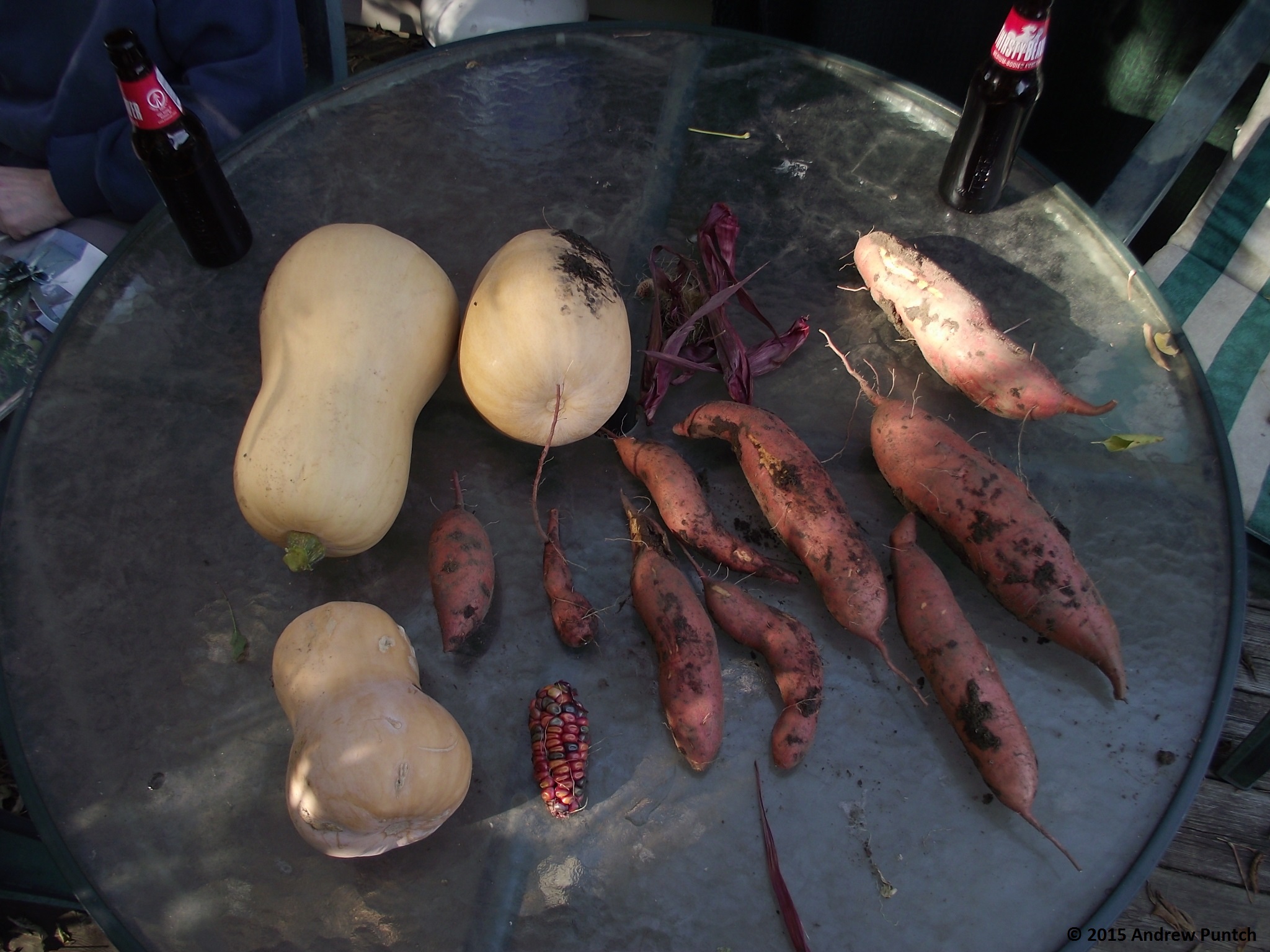
More of our gardens’ bounty. Butternut squash, sweet potatoes (and more to come!), and an experiment with corn. I think this is the only ear we got; we should do a little better next year once some trees are pruned which will allow more sunlight to reach the garden.

DSCF6989 - Copy

Season of plenty

From upper right: Home-grown garlic; home-grown red and purple potatoes; and a ‘basket’ of vegetables – snap peas, cherry and grape tomatoes, vine tomatoes, bell peppers, and onion, and radishes – from the nursery at the edge of town. All organic goodness. How blessed we are to have our own little garden and a good nursery in our little town.

DSCF6902 - Copy

Bounty

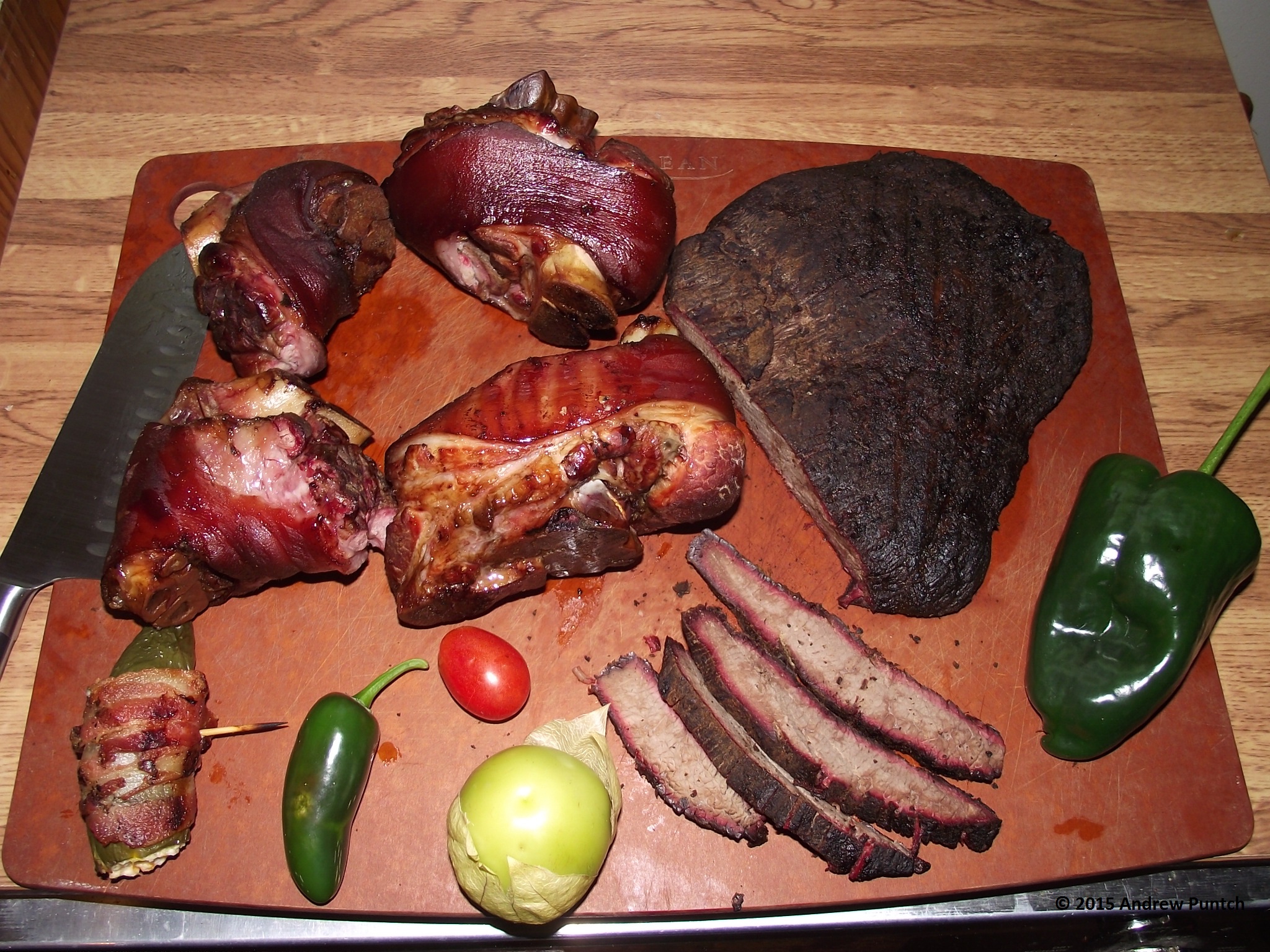
A recent harvest. Ham hocks and beef brisket home smoked; grilled jalapeno popper; and a poblano, jalapeno, tomatillo, and tomato from the garden. Simple yet wholesome fare.

DSCF6809 - Copy

Bounty

What we harvested today from our garden. Chocolate Cherry and Roma tomatoes, Jalapenos, tomatillos, a poblano and a sweet pepper. We are blessed to have such a productive garden. I am blessed to to have such an industrious partner who loves putting her green thumb to work.

DSCF6764 - Copy

We have rhubarb!

image

We have garlic!

taken and posted with the PlayBook

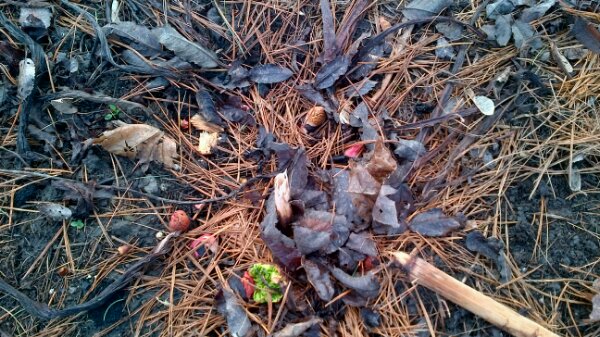
We were very pleased to discover that all 38 garlic cloves we started last fall made it through the winter. Presuming they make it to the fall we should have a good supply to plant as well as a lot for cooking. And there are the scapes to look forward to using.

image

Cheerful

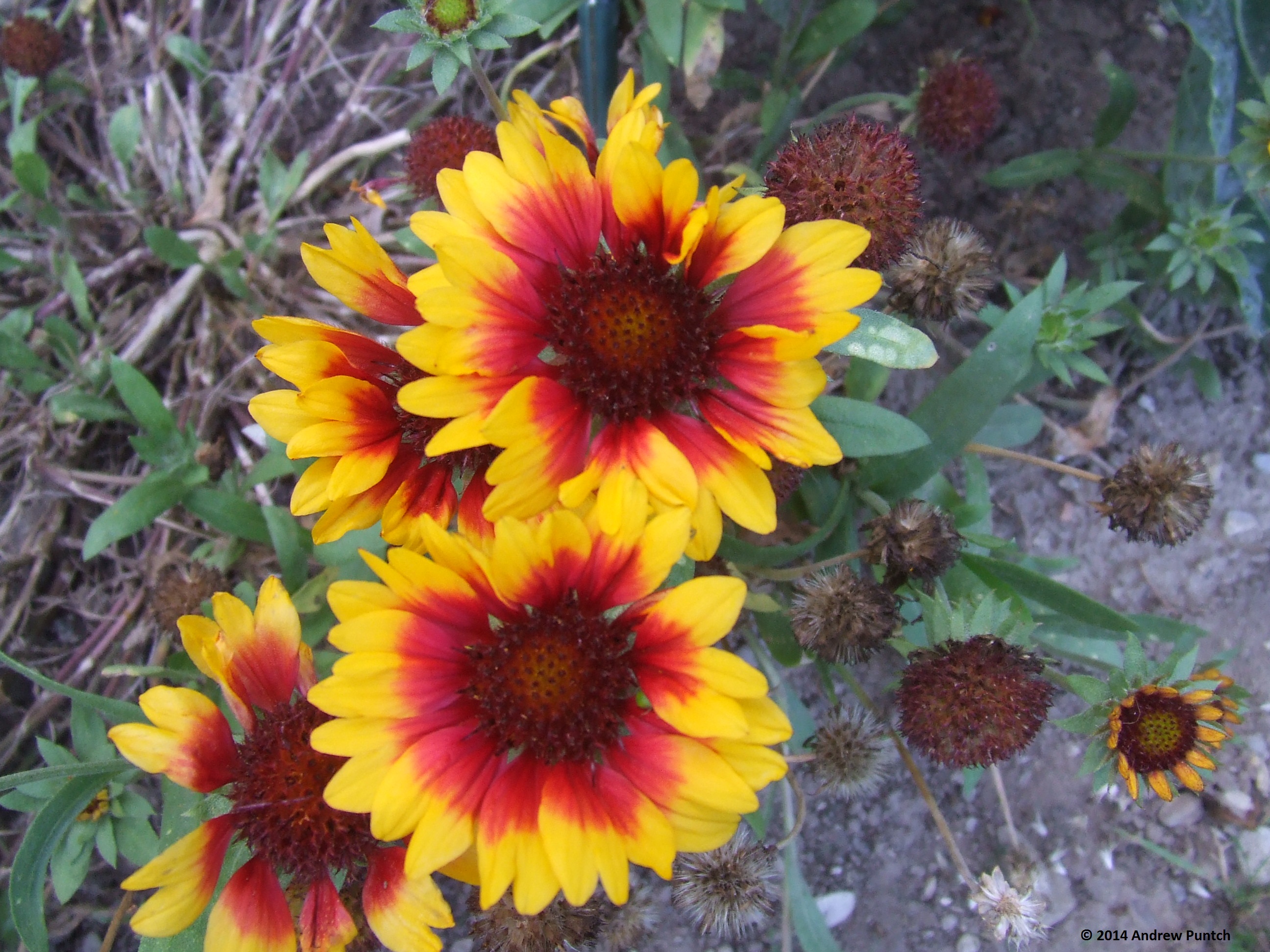
I rarely fail to smile when looking at our gaillardia. Cheerful, bright bursts of sunshine at ground level. Sometimes I get down to their level to better appreciate their beauty.

DSCF8798 - Copy

We have spuds

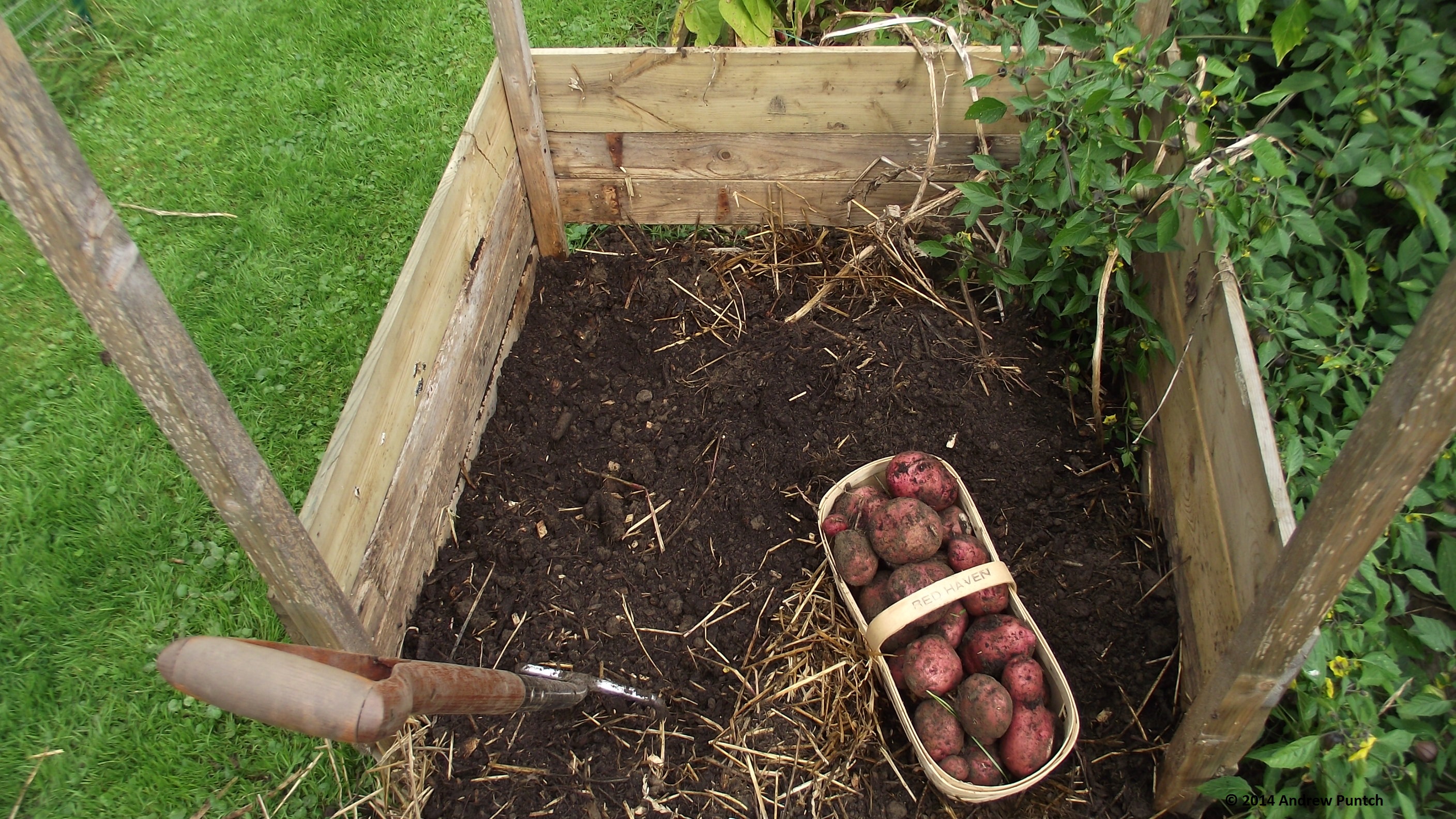
Our potato box was very productive. Last spring we started our potatoes in this approximately 3′ x 3′ box. As the vines grew we added boards to the box frame, layer by layer, and piled in straw with each layer until the straw was about 15″ deep. I harvested the bounty today and reaped about ten lbs. of potatoes and there may be even more below the level I dug to. Ten lbs. is certainly not enough to last all winter but we now have the confidence of knowing the method works for us. The earth I turned over is amazingly rich in organic matter, earthworms, and other good stuff.  I suspect we’ll try again next year.

DSCF4661 - Copy

Rainwater harvesting

Rainwater harvesting

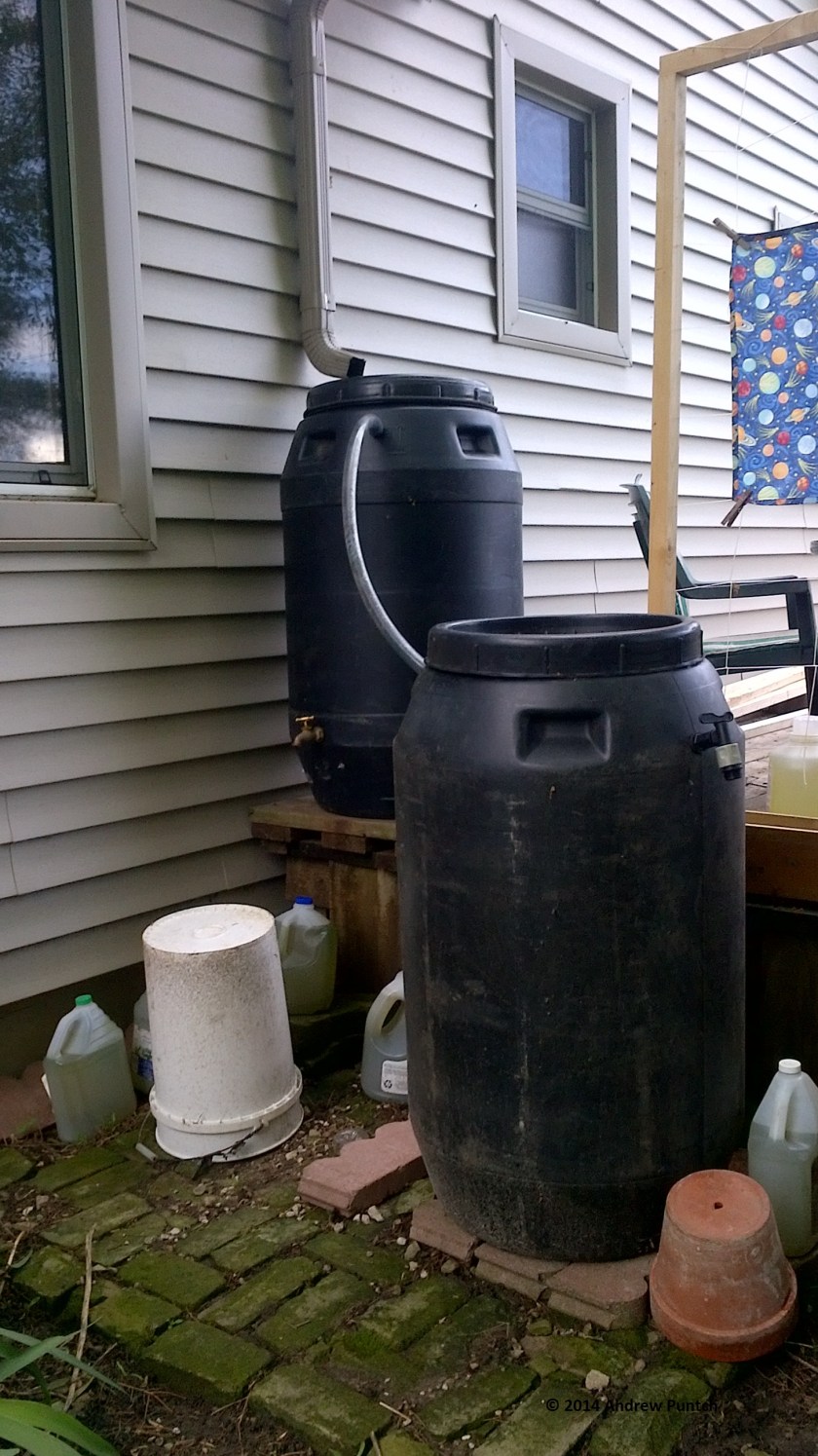
This is our rainwater harvesting system. It’s instrumental in keeping our garden irrigated.

We obtained two food-grade olive barrels (free!). I drilled a 1″ hole toward the bottom of the vertical side of the one on thre deck and another 1″ hole toward the top of the vertical wall. I installed a brass spigot in the bottom hole and a fitting with a 1″ I.D. tubing in the top hole.

Then I drilled two holes in opposite sides of the upper portion of the bottom barrel. The other end of the tubing with a fitting on that end plugged into one hole and serves as an automatic overflow from the upper barrel into the lower barrel. An inexpensive plastic spigot fitted into the other hole and serves as an overflow valve for the lower barrel.

Faye stapled window screen to the inside of the screw-on rings to serve as mosquito barriers. I had to do a little cutting on the downspout so the upper barrel would fit underneath. Then we put them in place.

Betweeen the two barrels we can store about 100 gallons (375 liters) of rainwater. Our various water jugs – repurposed laundry detergent, water, and vinegar jugs – add another 8 gallons’ capacity. For the past three years this has been more than enough to keep our garden, potted houseplants, and some specimen plants irrigated, and we have never run out of water. Our financial layout for the whole setup has been around $40.

We do not irrigate our lawn, either with harvested water or city water. While we like the look and feel of turfgrass we are gradually decreasing the amount of lawn. We are a little different from many people in that we do not see the point in watering and fertilizing something that you then mow, that you water and mow, that you water and mow, that you fertilize and water and mow . . .

We expanded the garden this year and this may test our water storage capacity. Only 13mm of rain has fallen since May 16. After the (probably overly) prodigious watering I did while Faye worked we have around 50 gallons between the two barrels.

It’s a bit of a fiddle to carry water to the garden. We are looking at adding eavestroughs to the shed which would empty into one or two barrels inside the garden area, shortening the carry.

Garden fencing up

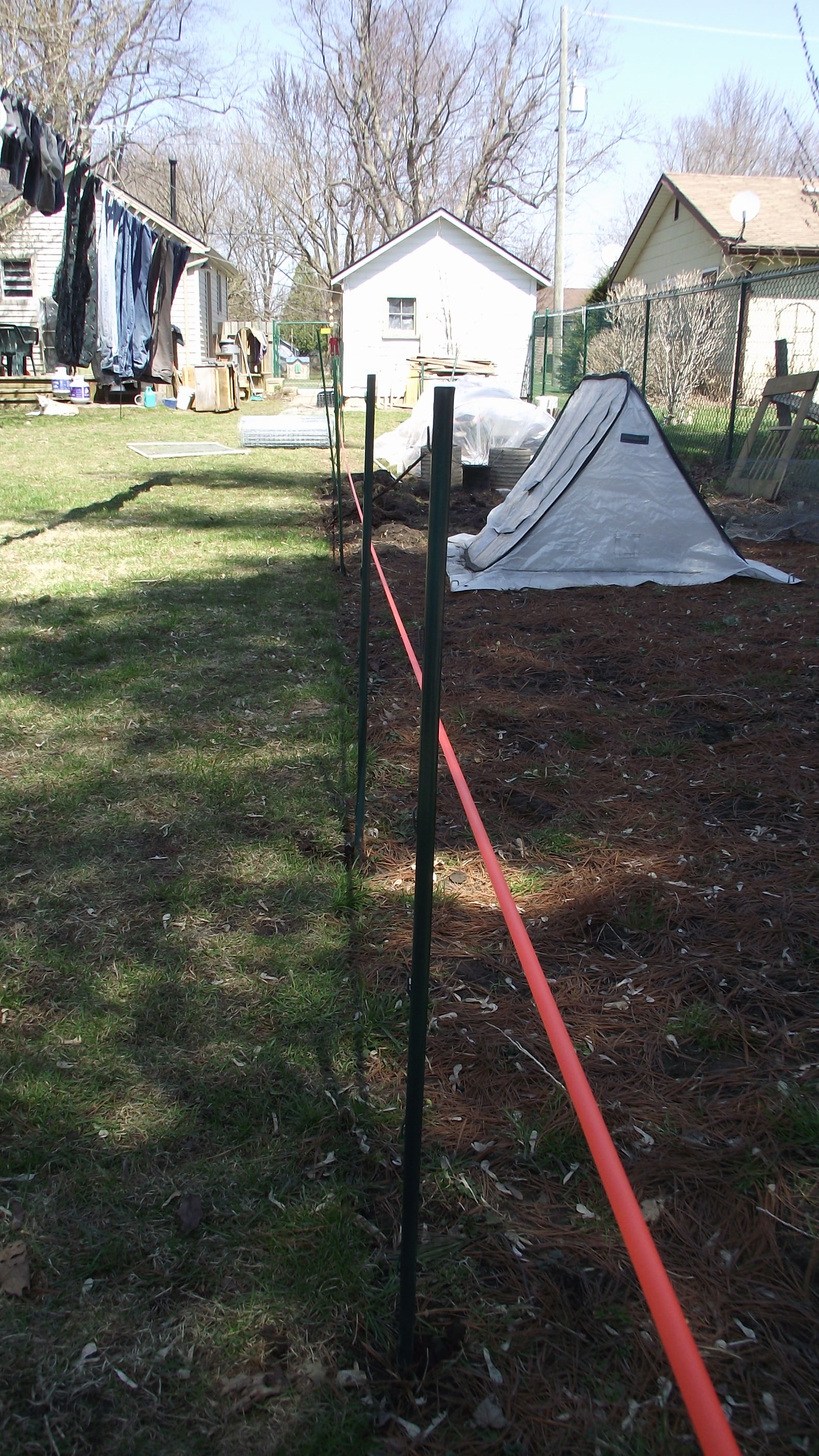
In previous years we fenced off a small portion of the yard for our vegetable garden, using chicken wire. That served the purpose yet was usatusfactory for several reasons. This year we decided to greatly expand our garden and concomitantly use a less flimsy barrier. We agreed to fence off the entire portion of the yard 8′ in from the east chain link fence. This not only encloses our current and expanded garden, it allows for future expansion and protects our compost piles from three marauding dogs named Achilles, Kendal, and Stella.

We bought a 100′ roll of 16 gauge rabbit fencing with a 2″ x 2″ opening size and a few more 4′ steel posts. We put the posts up using orange tape as a rough straight line.

DSCF3302

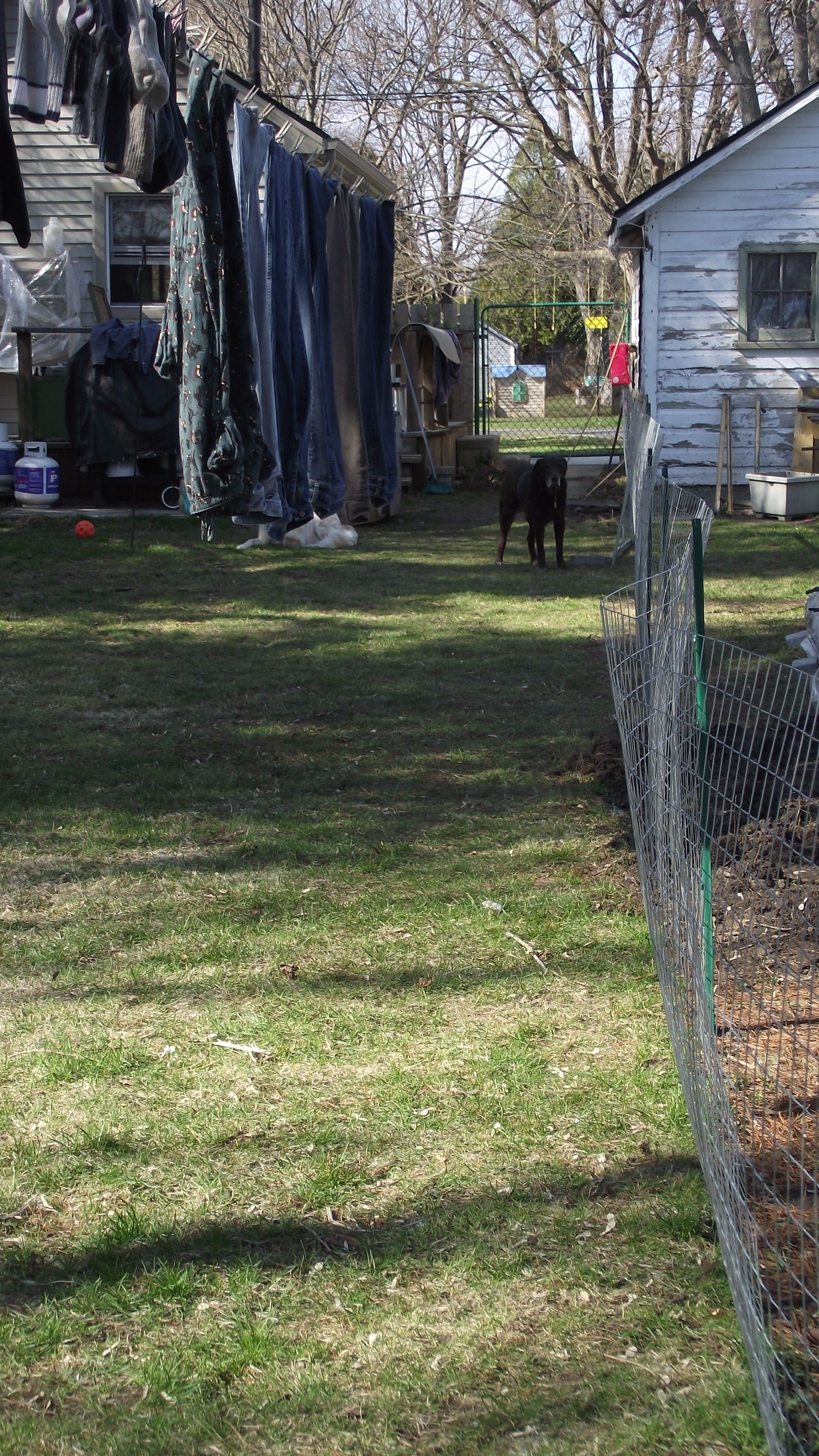
Then I unrolled the fence. We will have two gates, one allowing quick access to the compost piles and one quick access from the house into the garden and the staging area (background, near the shed).

DSCF3307

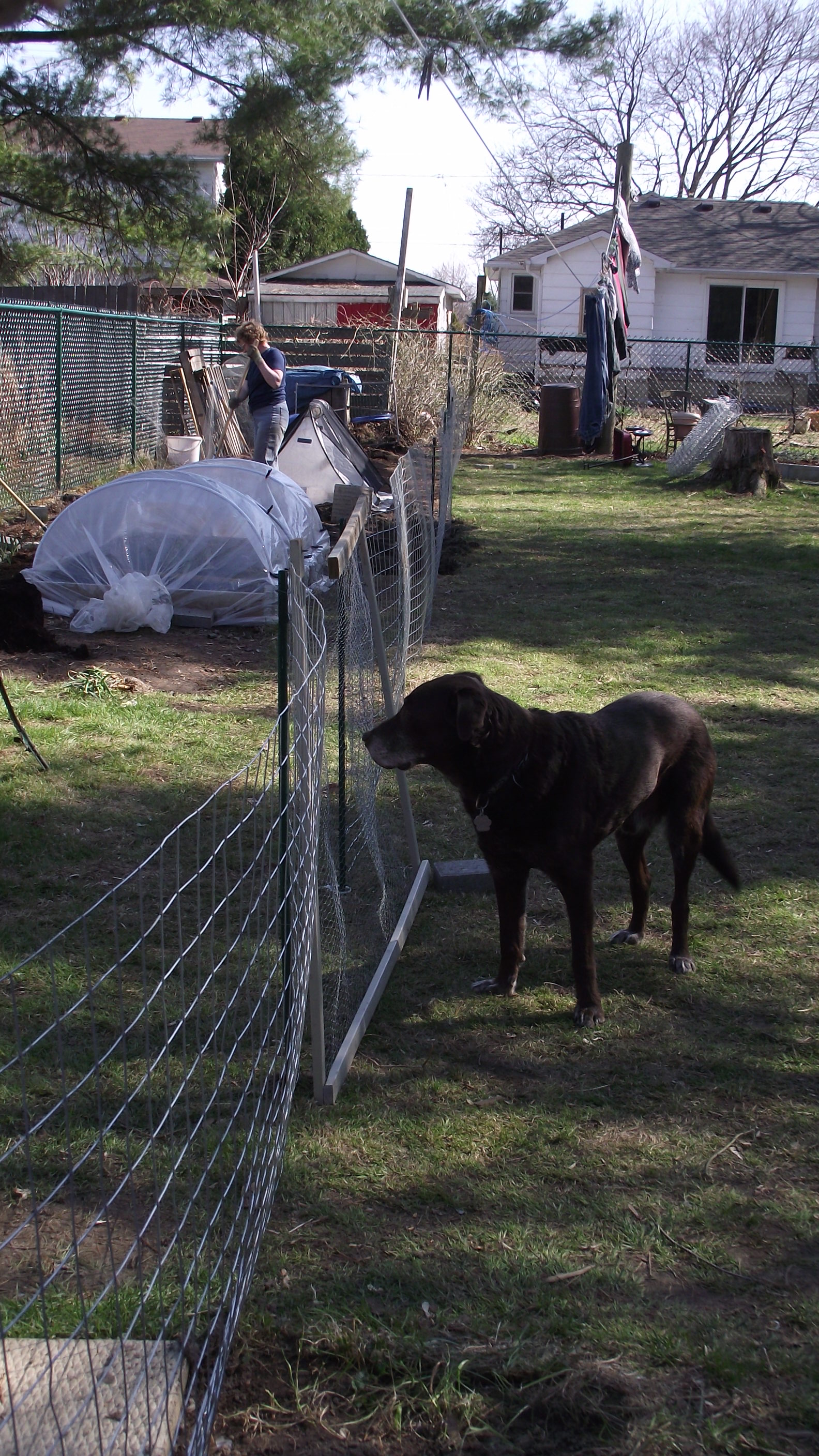
We used one zip tie per post to ‘tack’ it into place while I wired the fence to each post. Faye keeps working in the raised bed as I get the fence up.

DSCF3310

Kendal is unimpressed with our work.

DSCF3311

Fence is up!

DSCF3314

We have more work to do. It includes taking the slack out of the fence, installing permanent gates, roto-tilling after the ground dries a little more, mulching, and relocating the clothes line.